


X-Jet
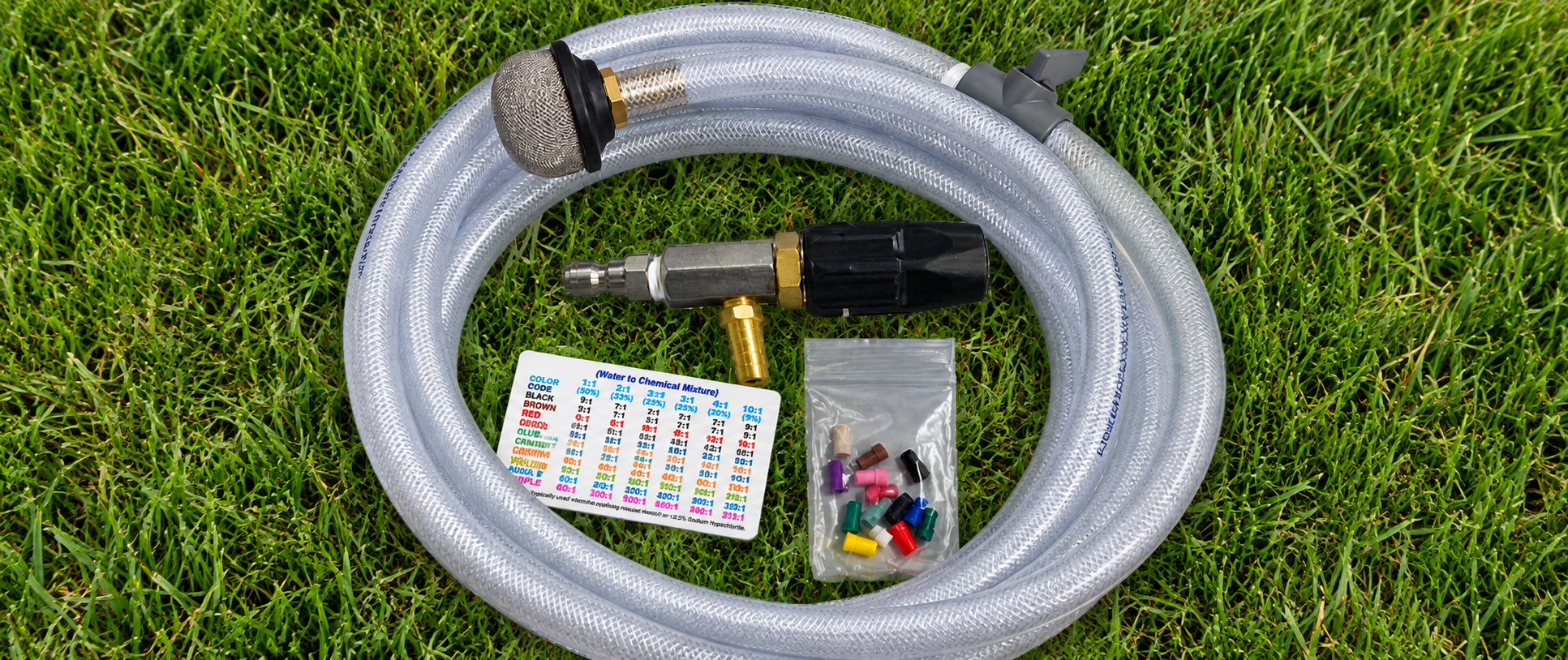
X-Jet M5 Kit
Log in for pricing

Turn your pressure washer into a powerful soft wash system. Apply chemicals up to 40 feet from the ground with zero risk to your equipment.
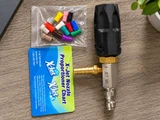
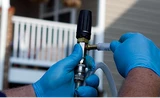
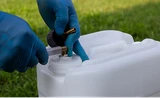

Why X-Jet?
Not all injection nozzles perform the same. Here's why professionals choose the M5.
| X-Jet M5 | Downstream Injector | Generic Nozzle | |
|---|---|---|---|
| Pump protection | Full bypass | Chemicals go through pump | No bypass |
| Adjustable spray angle | 0–60° twist | Fixed | Limited |
| Reach from ground | Up to 40+ ft | Reduced | Standard only |
| Proportioned chemical control | 14 tip sizes | Limited | None |
| Works on hills/tall buildings | Yes | Gravity limits draw | N/A |
| Soap + rinse, one nozzle | Inline valve | Tip change required | N/A |
X-Jet
Log in for pricing
Find answers to common questions about X-Jet products, setup, and performance.
The X-Jet M5 operates on a Venturi vacuum principle directly at the end of the pressure washing wand. High-pressure water generated by the pump passes through a precision internal orifice inside the nozzle body, creating a localized low-pressure drop that draws chemical solution through an external suction hose.
Because chemical injection occurs entirely at the nozzle discharge point (post-hose and post-gun), harsh solutions—such as Sodium Hypochlorite (bleach), caustics, or acids—never enter or pass through your high-pressure pump, unloader valve, hose reel, high-pressure hose, or spray gun seals. This eliminates internal corrosion and premature seal degradation. Switching from chemical application to clean water rinsing is accomplished instantly by shutting the inline ball valve located on the siphon hose.
Matching the internal orifice size of the X-Jet body to your machine's volumetric flow rate (GPM) and operating pressure (PSI) is critical to maintaining proper Venturi suction. An oversized orifice reduces fluid velocity and destroys chemical draw, while an undersized orifice creates excessive backpressure on your pump unloader.
Use the following sizing guide to select the correct orifice kit:
| Kit / Orifice Size | Machine Flow Rate (GPM) | Operating Pressure (PSI) | Primary Application |
|---|---|---|---|
| Kit #7 | 2.0 – 2.5 GPM | 2000 – 3000 PSI | Light commercial / Residential residential units |
| Kit #9 | 3.0 – 3.5 GPM | 2000 – 3000 PSI | Mid-range residential washers |
| Kit #13 | 4.0 – 4.5 GPM | 2500 – 4000 PSI | Standard professional contractor rigs |
| Kit #16 | 5.0 – 6.5 GPM | 2500 – 4000 PSI | High-flow commercial rigs |
| Kit #20 | 7.0 – 8.0 GPM | 2500 – 4000 PSI | Heavy-duty dual-gun / High-GPM rigs |
| Kit #25 | 8.5+ GPM | 2500 – 4000 PSI | Ultra high-flow industrial soft wash systems |
While both tools share the identical adjustable twist head, they utilize fundamentally different chemical feed mechanisms:
The X-Jet M5 kit includes color-coded threaded plastic proportioner tips that insert directly into the hose barb to restrict chemical flow and dial in precise dilution ratios.
To determine the Sodium Hypochlorite (SH) percentage hitting the cleaning surface (C_surface), use the formula:
C_surface = (C_raw * D_bucket) / R_injection
Where C_raw is the batch concentration in the bucket, D_bucket is the bucket fraction, and R_injection is the nozzle draw ratio.
We offer a proportioner calculator a quick reference point. Follow this link Calculator
Many professional contractors elect to remove proportioner tips entirely and run the nozzle 'wide open' (open barb) for two practical operational reasons:
1. Salt Clogging Prevention: Small proportioner orifice openings frequently clog due to crystalline salt precipitation native to bulk liquid bleach.
2. Chemical Economy & Precision: Drawing straight 12.5% bleach wide open consumes a 5-gallon pail in under 3 minutes (~1.6 GPM chemical draw). To prevent chemical waste without proportioner tips, contractors pre-mix or 'batch mix' bleach, water, and surfactant directly inside the 5-gallon pail (e.g., 1 gallon of 12.5% SH + 4 gallons of water + 4 oz surfactant). When drawn at 4:1 through an open barb, this hits the wall at a perfect ~0.8%–1.0% active SH for vinyl house washing without risk of tip clogging.
Yes. Extending the suction line allows contractors to leave the 5-gallon chemical bucket in a central location or on a hand truck rather than dragging it by hand around the perimeter of a home.
The X-Jet M5 features an adjustable outer sleeve that rotates continuously to alter spray pattern geometry without stopping the machine or changing chemical draw rate:
If your X-Jet M5 stops drawing chemical, troubleshoot using the following checklist:
1. Air Leaks: Inspect the suction line for micro-cracks, loose hose clamps, or dry-rotted seals on the inline ball valve. Venturi vacuum fails instantly if air enters the line.
2. Clogged Intake Filter: Inspect the weighted mesh strainer at the bucket end for salt build-up, leaves, or debris.
3. Reduced Engine RPM: Lowering engine RPM drops GPM output and water pressure, collapsing the Venturi pressure drop.
4. Preventive Maintenance: Always flush the nozzle body, hose barb, and suction tubing with clean, fresh water for 60 seconds at the end of every job. Sodium hypochlorite crystallization will seize the internal ball valve and corrode internal brass components if left unwashed.
Join a growing network of partners and offer industry-leading products trusted by professionals nationwide.